Monday, April 28, 2014

Some very precious eggs

Remember my post of March 3rd about the barn owl pair I was supplement feeding?


Well the good news is that they have laid six eggs, the last of which was laid just in time for Easter.
I’ve been monitoring their progress via video link from a nest cam linked to my hide. The first egg appeared on April 1 and I have been watching each subsequent arrival with baited breath.


He would let out a soft chittering call as he flew into the box. As she replied you could see her wings quivering and she would tremble as he entered the nest chamber and delicately offered her the mouse.

After she accepted each offering, he would mate her and head back out to hunt for another.

On one occasion I watched him present her with a mouse, and then mate her, twice in the space of 20 minutes, before, on the third occasion, she took the mouse from him and stood up and turned sharply on him as if to say “Not this time!”

It was very exciting when I crept into my hide on April 1 and switched on the TV monitor to spot an egg under her belly.


After that she laid another egg every three or four days until she had a clutch of six.
Barn owls don’t usually start laying until the first two weeks in May, so if we are lucky this pair might go on to lay another clutch this year.
It would make a huge difference to local populations if they did. This month the Yorkshire Wildlife Trust launched a campaign to save the ‘last barn owls in Yorkshire’: these birds of prey could disappear from the county altogether if the current rate of decline continues, so every owlet counts.


I’m so glad I decided to supplement feed this pair as it really has worked. It is so satisfying to see that all my day trips to feed this pair in all weathers paid off. 


I found it very rewarding too. It was so exciting going into my hide each night and turning on the screens to count the eggs.
I’m hoping the first egg will hatch on May Day. I can’t wait. They won’t all hatch at once and so it will be thrilling waiting for each chick to emerge.


This is a picture of two chicks I painted some time ago. These chicks will differ in size considerably and I’m sure there will be plenty of drama in the secret world of the nest box.
I’ll be posting live footage of the chicks as they hatch, so watch this space.

Monday, April 21, 2014

Kestrels: A different sort of Easter Egg


I’m not really into watching the television, but this week I have been glued to the box. I’ve set up CCTV cameras in a kestrel nest box and it has had me entranced. Putting it all in place has been a logistical challenge. We dug trenches and buried cables then had to link the footage up to television screens in my studio, house and gallery.


My heart skipped a beat when I turned on the screen for the first time to see a male kestrel walking to the back of the box, lying down and flicking his feet to form a kestrel-sized nest scrape. The female arrived at the entrance. He bowed his head over and over again as if to say, ‘c’mon look how well suited this one is.’ She sat down on his nest scrape but looked less than impressed by his handiwork. She found an uncomfortable bit on one side and started to peck it. It didn’t help that they were getting hassle by up to 26 jackdaws. She went off for a viewing in another nest box close by in a huge elm tree stump that I had put up a few years earlier.


The male was quite impressed and dug a fresh nest scrape. The female changed her mind - she strutted around picking fault. It wasn’t to be and she flew down the valley looking at three other sites in hollow ash trees. A stand-off between the couple ensued. They sat apart for a whole 12 hours each outside their chosen nest site. By the end of the day the male looked dejected and by evening he gave in. He passed her a morsel of food and they made up by mating.

By morning it was all change and they were back at the first nest box – in spite of the fact that it was now half full of twigs as the jackdaws had moved in. The male took a look and I could almost see him roll his eyes before he valiantly tried to remove a few of the tangle of twigs! That night I got my ladder out gave them a helping hand by pulling out all the sticks that the jackdaws had put in and put a bag of fine bark chips into the box too.

The following morning the kestrels were battling with two very annoyed and newly evicted jackdaws. Events turned serious, when I saw the kestrel going into the box followed closely by a thuggish looking one. On screen, I watched the kestrel grab at the jackdaw and with their feet locked on to each other they tussled in the box. This was going to be a fight to the death. It was difficult to watch. I ran down to the box and frightened the jack daw away.

The female returned to guard the site half an hour later she thought it was worth fighting for, but the male kept clear for three hours as if he was trying to entice her further away. The jackdaws surprised by the strength of this diminutive bird of prey have kept away so far.


On Wednesday morning the first egg was laid by the female in the first box while I was making breakfast. “An egg,” I shrieked, and called my daughter Lily to come and have a look. “Is it a chocolate one?” she asked. It certainly looked chocolate coloured on screen. “No it’s a real one” I explained. We both looked back at the screen intently, amazed at what we were seeing. Lily piped up “It’s our special egg for Easter, isn’t it Daddy?” It certainly was.

Monday, April 14, 2014

Little owls settle in to newly renovated home


The Yorkshire Wolds is great ‘little owl’ country and I love to paint these charismatic owls. Yet, a cold spring last year and freezing conditions which were so severe for the previous two winters has meant that all the little owls bar one pair that I know of in my local patch have gone.


So I was delighted this week to spot a pair busy looking for a new nesting site on the other side of Thixendale from my gallery one morning. There have been no little owls in this valley for two years.

I quickly got out my binoculars to watch them as they inspected the surrounding trees for suitable holes to nest in. They seemed to be particularly favouring a rabbit warren for their prospective site. They stood outside the entrance to the rabbit hole. Next they peered down into it before disappearing down underground. It made me wonder if something was wrong.

Little owls usually only pick rabbit holes to nest in when there are no other suitable sites. The holes, often some of them still used by rabbits, leave these small birds of prey open to attack from stoats and rats.

I wondered why they seemed to be plumping for this option when just 70 yards away there was a large ash tree with a hole in it which I know has been used by little owls many times before.

I decided to return the next day with a ladder to inspect the hole for myself. I propped it against the tree and climbed up to find it was completely blocked up with debris.

I carefully dug it out for them. Little owls are quite fussy about their nest sites, and rightly so. Being so small they are liable to come under attack from other larger birds of prey such as tawny owls, buzzards and sparrow hawks. Jackdaws compete with them for nesting sites. I have watched six jackdaws trying to push a pair of little owls from a prized site. And they will even take their eggs if they find their nests.

To be safe little owls choose long, small holes, preferably with a few bends and turns in it, that only they can fit down. They also need a chamber at the end for the nest.

By the time I had finished clearing the hole it was two feet long and difficult for me to get my arm down – perfect for a nesting pair of little owls. Before I left I set up a hide opposite the tree on the daleside near the rabbit holes so that I could watch what happened next.

 
I got into the hide early the next morning and waited. It wasn’t long before the pair arrived at the rabbit hole. They settled on a spoil heap outside the hole and began preening one another. I took the opportunities to get some good photographs.


After lunch one of the owls flew up to the ash tree to hunt for beetles. I held my breath as it passed my newly renovated hole. The little owl spotted it and promptly disappeared into it and out of sight.


 It was only gone for a short while before it popped out again and called to its mate to come across and take a look. They both then disappeared into the hole for a few minutes.

As they came back into view they began to call to one another and then to mate. Clearly they were pleased with my clearing up job and had decided to move in. I'm hoping this painting of mine will come true later in the year....


www.robertefuller.com


Monday, April 7, 2014

A Farm-tastic Week


I took my two daughters to the farm I grew up on in Great Givendale and showed them the barn where cattle feed is kept. They were fascinated at all the different types of grain stored there. I suppose they had imagined that cows just ate grass.
In fact Lily, who is five, was so intrigued that she took pockets full of rolled barley and sugar beet pellets into school and handed it round to all her classmates. Her teacher was so impressed she gave Lily a certificate! I’m lucky to be able to show my children how our food is produced. My father was a farm manager and the feeding and rearing of cattle was what my childhood was all about.


Organisations such as Countryside Learning, which traditionally arranges farm visits for inner city school children, are now running trips for children already living in the countryside too. Can you believe that these days even rural-living youngsters are disconnected from farming too? And I was dismayed when I read that, according to figures published by the National Trust in 2012, only one in 10 children get the opportunity to play in wild places.
Watching Lily and Ruby, who is just two, climbing the little ‘hillocks’ of grain and racing down them again, I realised how I took experiences like this for granted when I was growing up. For many parents trying to encourage their children out of the living room and into the great outdoors has become a battleground. And it’s easy to see why. Although the benefits of going for a walk in the countryside are obvious, it can often be a fraught time getting the children out of the house – especially in cold weather. Just getting my two kitted up and ready to go can very nearly send me around the bend. But once we are out we all enjoy it.


I decided I would introduce my girls to an outdoor life early. Both girls have special camouflage jackets which are a great hit! I don’t take them out for long, and I never guarantee a sighting, just in case. We go out in the evenings sometimes to watch badgers at a sett close-by or drive past barn owl nest boxes to see if they are inhabited. They get very excited when they spot something.

I always take along snacks and colouring pencils and Lily can now manage to stay quiet for at least five minutes if a badger ventures out, which I think it quite good going. Both girls are gemming up nicely on their bird knowledge and can both can identify barn owls, kestrels, puffins and red kites in the field. It is important to me that my girls feel comfortable around animals. A few years ago we had a barn owl as a pet, and from about the age of one Lily would fly it about in the kitchen to the glove and we've been caring for a hedgehog over winter.

This year the National Trust has called on a number of different organisations to reach out to children and encourage them to get in touch with nature. I thought I would try to do my bit by offering them the experiences that first grasped my attention as a child.

So this weekend I held a big farm event at my gallery. I’d arranged for lambs, piglets, ducklings and calves to form a mini–petting zoo in the courtyard outside the gallery. Each animal had its own little pen filled with straw and seemed completely unfazed by all the attention. Danny Cameron of Eagle Eye falconry had brought along a great display of different birds of prey including a barn owl, burrowing owl and eagle owl called Teddy. Teddy is an imposing looking bird but I was amazed how many youngsters wanted to try holding him on a glove!


There was pony rides on offer too, along with a farm quiz around my wood, and an opportunity to dissect owl pellets that I’d collected with my daughter Lily on the way back from the school run earlier in the week. Anyone that could find more than 5 bones could claim a prize. It was quite a draw - one little girl spent over half an hour sifting through one pellet!


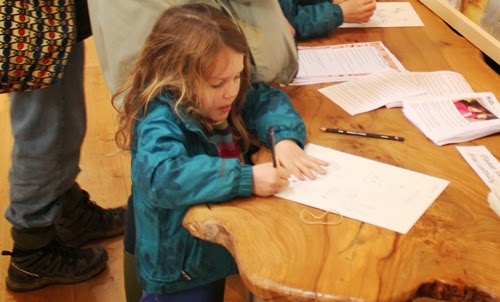
And the children loved the chance to copy one of my original paintings in the gallery. There was a few budding wildlife artists among them – it can be surprising how good some can be even at a young age.


Over the course of the day over 350 people turned up – so there is clearly lots of people who value an opportunity to see and learn about farm animals. Long may it continue.


Monday, March 31, 2014

Clan Take Over: New boar on the block


I've just seen a new boar at the badger sett I visit. He seems to have taken over the clan. I saw him for the first time last week as I was sitting quietly watching another badger that I call Humbug. I have habituated Humbug to my presence and she'll even take biscuits from my hand.

As Humbug calmly dug for worms at my feet, I heard a sound behind me. I looked up from where I was sitting to see this new boar standing tall at the top of a steep bank behind me in a threatening manner.

And I’m sure it was delibrate! As he stood tall on the bank, he sniffed at the air and then abruptly cocked his leg. He then snorted loudly before sauntering slowly and meaningfully back to the sett. I think I was being put in my place!

This new boar appears to have brought three or four females with him and a number of the previous sows, and the previous boar, have gone. Last time I was lucky enough to stroke Humbug I noticed she had a lot of scars on her front, and I suspected that she might have been fighting. Now I’m sure of it.

This boar is not nearly as impressive looking as last year's boar. I've dug out my photographs of the boars from previous years to show you.

This boar reigned from 2012-2014
Last year’s boar was very handsome. He was a huge, powerful badger and I had hoped his reign would last a bit longer. He took over during the summer of 2012 in a very aggressive campaign during which I am fairly sure he killed the clan cubs.

He made up for this initial reign of terror the following year by being very playful with his own cubs. It was a great to watch him in this paternal role.


This boar (above) reigned from 2011-2012. This boar (below) reigned in 2009-2011.


This (below) was one of the male cubs from 2009, who I nicknamed 'Dyson'. This was one of the last times I saw him when he was a nine month old boar looking fit and well ready for winter.
 
This type of unrest amongst the clan seems to happen nearly every year here and in fact none of the 14 original badgers I watched back in 2009, when I first began to keep a nightly watch on this sett, remain. Whenever a new boar appears the old one is either ousted, taking some of the sows with him, or killed.

This turmoil is very unsettling for all concerned. The tension at the sett is tangible and the badgers become frightened of their own shadows. It means that many of the badgers I have spent so long habituating to my presence have gone and these new badgers are more nervous of me.


Of course it also affects the studies I make for my paintings! Last year I knew each individual and had sketches and photographs of them all and now of course I will have to start the lengthy process all over again.
 
This week I've been watching the new boar scent-marking and strutting about. He kept rubbing his feet in his own urine and parading up and down paths that lead to and from the sett and then I spotted him mating a sow and realised he had been warning off any competitors.

Badgers can mate all year round and implantation is delayed so that cubs are usually born in February and don’t come out until spring. Although with this new takeover I wonder if the mating has occured now because the new boar has killed the cubs underground. I will be keeping an anxious watch over the next few weeks to see if any cubs appear. I really hope they are okay.

Thankfully Humbug is still at the sett, although even she is cautious. I’ve become so fond of her I would be very sad if she gets ousted too.

Monday, March 24, 2014

Cobweb Collectors


I have nine long-tailed tits visiting the garden at the moment. They come once or twice a day to feed on the fat bars, but the busiest time is just before dusk.

They are such delicate little birds it’s a pleasure to watch them flitting about in the fading light and to listen to the musical notes they make as they call out to one another companionably as they feed.

Long-tailed tits have strong family bonds - extended family members all help to bring up a brood - and they fly about in family groups or pairs, calling to one another continuously. I've been wondering whether these visitors are the grown chicks from a nest I watched in the valley below the house last year.


I had first spotted the adult pair whilst painting at my easel. They had been investigating the greenhouse, checking every crevice and overhang in a fussy, pernickety fashion. At first I had thought they were looking for insects. But by the time they had made their third trip to the greenhouse I suspected something else was up.

I got out my binoculars and camera and opened the door to the studio so that I was ready to watch more closely when they next visited. It was a bit chilly with the window open, but I wanted to hear them coming so I pulled over another jumper and carried on painting as I waited.

 
After a short while I heard their distinctive calls and looked round to see them bobbing along the hedge, taking short flights. I picked up my binoculars and watched as they began exploring around the greenhouse again. They were picking at spiders’ cobwebs in the overhangs.


Long-tailed tits weave soft, delicate nests out of lichen, moss or sheep’s wool and then almost stitch it together with sticky cobwebs so that the nests can expand as their chicks grow. They can have up to 15 in a brood – so they need the space!

 
Seeing such a delicate, beautiful bird tug at soft nesting material is a touching sight and one which captured my imagination and inspired me to paint this bird as it pulled at some sheep’s wool.

By the next day this pair had gathered most of the cobwebs from the outside of the greenhouse and had gone inside looking for more. I could hear them calling excitedly to one another as they gathered up what must have felt like an unlimited supply.

I was worried they would get trapped in there, but I noticed that they were able to find their way out of a small gap where the window had been left ajar and watched them carry off their plunder towards the valley below the garden.


By lunch time, after watching these almost continuous trips back and forth, I couldn’t resist having a look for the nest. I set off down the valley in the direction the long-tailed tits had headed and waited.

It wasn’t long before I heard them. They were following the hedge line away from the greenhouse and were flying into a line of sycamores in the bottom of the valley. It was difficult to keep track of them in the large trees and sure enough I soon lost them.

I repositioned myself on the other side of the valley where I had last seen them and spotted them on the way back to the garden, so I sat tight and waited for them to return.

It turned out that I had positioned myself in just the right spot. They flew over my head and into the hedge beside me and then followed the hedge down the valley. They stopped in a dense bit of hawthorn hedge. I could hear them calling excitedly as I crept closer and peered in with my binoculars.
 
It was incredible seeing them building the nest. To start with it was cup-shaped, like most nests, but they built it up over the course of a few days into a dome with an entrance hole near the top. Once the structure was complete they went on to line the nest with feathers.

Long-tailed tits are one of Britain’s earliest nest builders. I have seen them begin in the first week of February whilst there is still snow on the ground.

But this is to their disadvantage because there is little leaf cover to hide in at this time and it’s not unusual to find their nests ripped apart by corvids – especially magpies.


This nest was well hidden, however, and the chicks were successful. I’m keeping an eye out to see if the visitors to my feeders are nesting near the garden again, but no sign so far.

www.robertefuller.com


Monday, March 17, 2014

An evening with the badgers


Most evenings I visit a badger sett close to my gallery in Thixendale, North Yorkshire. Over the years they have accepted me as one of the clan.

As I walked towards the sett last week, I heard foxes calling from the field above. Through the red filter on my head torch I saw two barn owls fly into the darkness.  A kestrel was roosting on my tree-top hide and tightened its feathers as I shone the torch at him.

I climbed over a stile at the approach to the sett and three pairs of badger eyes shone back at me. One of the badgers came to greet me. It was ‘Humbug’: my favourite badger, the friendliest of the clan.

I threw a few dog biscuits down to her. Then I set about putting some mice on a fence post. I had brought them for a pair of barn owls that I have been supplement feeding over the winter.

I walked to my usual spot at the edge of the sett and sat down. I have a hide in the tree overlooking the sett, but I actually prefer being on the ground with the badgers - it seems more real.

 
Humbug finished off the last of her biscuits and trotted over to me. I held my hand out with more dog biscuits on my palm. A barn owl screeched eerily overhead and I looked towards the sound. As I did I felt a wet nose on my hand. It was Humbug delicately hoovering up the biscuits, taking just one at a time. She has better manners than most pet dogs.
 
I drew my hand gently away and she placed her front paws on my legs, searching for more biscuits with her nose. I stroked her back and she turned her head at my touch, but I gave her another handful of biscuits and whilst she was distracted I scratched her.

There were small bits of matted fur in her undercoat and scabs on her side and front – a clear sign that she had been fighting. This was surprising because Humbug is only a year old. Already she has had to fight for a position in the clan.

It explained why she had been a little wary over the last month. Any unrest in the clan can make badgers afraid of their own shadow.


 Another badger then appeared, its nose poking tentatively out of the a hole. It was Humbug’s sister and the two greeted each other warmly and then began to groom one another.


 They stood side by side nibbling each others backs and necks. I was relieved to notice that there was no reaction from this sibling to my scent on Humbug.


 Humbug began foraging for worms. She pushed her nose into the ground, pushing it in so far her eyes were below ground, before digging deeper with her powerful claws. 

Then a barn owl flitted across the starlit sky. I watched as it hovered over the post with the mice on - just three metres away from where I was sitting. As it picked up the mouse, I felt a real privilege that I have been accepted into the secret nocturnal world of these wild animals.